
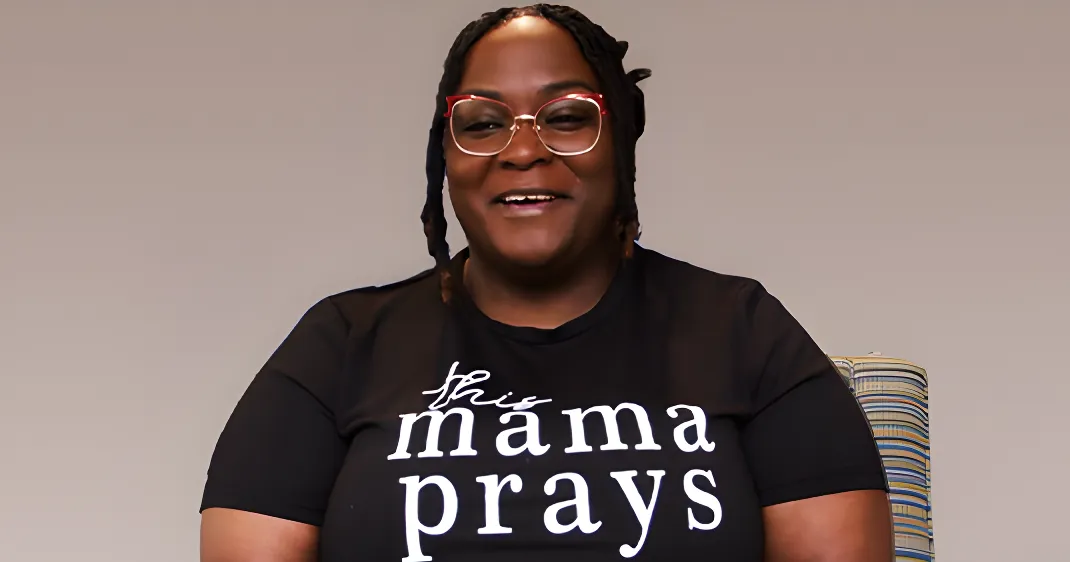
For the Webb family of East Texas, life changed long before they arrived in Dallas. During her pregnancy, Mrs. Webb received the news no parent expects. At 22 weeks, doctors told her that her baby, Ian, would be born with tetralogy of Fallot with pulmonary atresia, a serious heart condition that would require specialized care far from home. From that moment, the family knew they would need to stay in Dallas after Ian’s birth. The social worker at Children’s Health introduced them to the Ronald McDonald House of Dallas, and by December 19, 2024, the Webbs had found their new home.
The Webbs are a family of six. Mr. & Mrs. Webb are devoted parents to four boys: Ty, 20, Darius, 15, Cameron, 14, and baby Ian, just three months old. They describe themselves as complete now that Ian has joined their lives, but the road has not been easy. When Mrs. Webb first heard she would be living at Ronald McDonald House, she was hesitant. “I was terrified,” she admits. “You go to McDonald’s and they ask you to donate, and sometimes you do, sometimes you don’t. I didn’t know what it really was. I’m very much a homebody, I like my personal space, and I thought I’d be living with a bunch of strangers. But who knew those strangers would become family.”
Her fears eased the moment she walked through the doors. It was Christmas time, and the House was glowing. “There were big trees and decorations and gifts everywhere. It felt magical,” she remembers. “The people were so friendly. It looked like a decorated hotel, but with more. Children were on the playground, families were together, and we immediately felt welcomed.”
The location has been one of the greatest gifts. Just two minutes from Children’s Health, the House allows the Webbs to stay close to Ian’s care while keeping the rest of their family together. “When I first got here, I didn’t even have a car,” Mrs. Webb explains. “They provided the shuttle so I could get to the hospital. That was such a relief. Knowing I could always get there quickly gave me peace of mind.”
But convenience is only part of the story. The House has become a sanctuary where the Webbs can rest and reset after long hospital days. “Sometimes when you’re at the hospital, everything is so fast. You don’t even know what questions to ask,” she says. “When you come back here, you can breathe, think, and connect with other families going through the same thing.”
If she had to describe Ronald McDonald House in one word, Mrs. Webb chooses “rest.” It is a place where her family can rest their minds, their spirits, and their bodies. Hot meals, cooked three times a day, restore their strength. A quiet chapel allows them to feed their souls. A library offers her a chance to read and escape. Most importantly, the House offers the sense of safety and belonging that every family needs when facing uncertainty.
To the volunteers and donors who make this possible, her gratitude overflows. “Thank you,” she says simply but powerfully. “I don’t know if people tell you enough, but thank you. You have been a godsend. You provide a safe place at no cost to us, and this experience would not have been what it has been without you. Of course, we will donate when we leave, but nothing could repay what you have given us. Thank you so much.”
The Webbs are just one of approximately 400 families who have called Ronald McDonald House of Dallas their home-away-from-home in the first quarter of 2025. Their story is a reminder that while hospitals care for children, families need care too. The House gives them space to rest, to regain strength, and to stay close to the little ones who need them most. For the Webbs, it has meant more than a place to stay. It has meant becoming part of a community of compassion, hope, and resilience.
And for every reader, it is a chance to see the true impact of generosity. Each meal prepared, each volunteer hour given, each donation made is more than a number. It is the difference between fear and peace, between exhaustion and rest, between isolation and family. The Webbs remind us that when families are supported, children heal stronger. And when families are at the heart of care, there is always hope.